Learning Course Objectives (week 3)
- Deeti Mitesh Shah
- Jan 29, 2023
- 1 min read

Updated: Mar 17, 2023
Doing the metacognitive reading for Reyna Grande’s The Distance Between Us, I learned more about skills that the teacher hopes for us to use outside of the classroom, like metacognitive tools to help develop critical reading, as well as gained more of a curiosity to learn new things. For example, by annotating with visualizations related to the text or connections to my life, I better understood what I was reading by forcing myself to summarize as opposed to glazing over the whole excerpt. Also, making connections help me remember in the long-term. While I can do research on the author and see biases and contextual influences, metacognitive annotations force me to get a grasp on the main arguments, to have better critical thinking. Finally, although I have heard of reading nonfiction books to understand societal issues, reading an actual nonfiction book that is inspiring and interesting makes me want to read more nonfiction books to learn more.
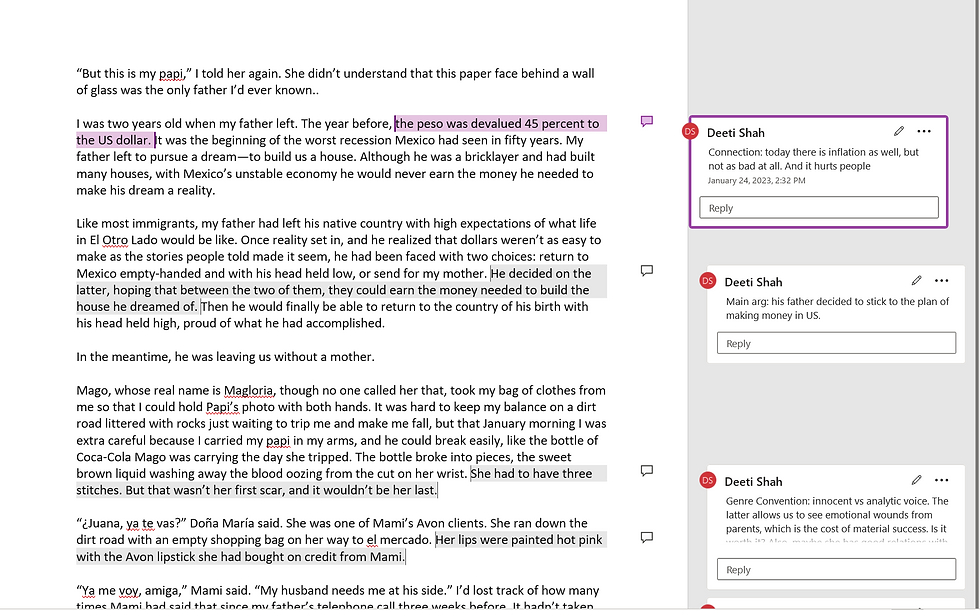
Metacognitive Reading: Helps Remember and Critically Read

Current Events Help You Know Your Rights
This also helps develop academic ethos because I can write more comprehensive essays as I am more curious about the subject, so I may be more prompted to learn more about the topic. Readers are more likely to believe someone who is less biased and wants to learn about the issue fully. I am also becoming a member of the academic discourse community by strengthening my conventions with metacognitive reading that helps remember and recall information. Being part of the academic discourse community means that one understands the conventions of academic writing, so metacognitive skills helps with this.


Comments